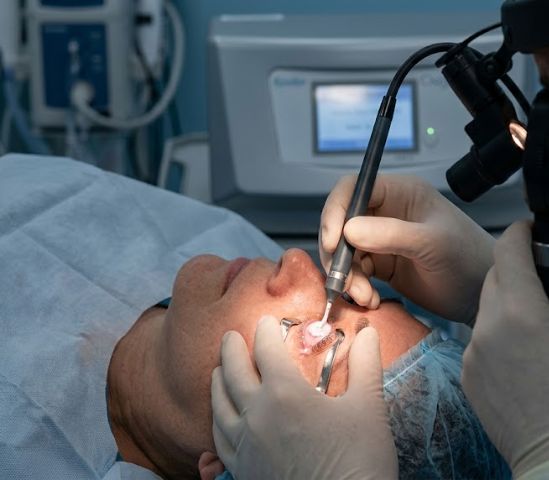
Retinal cryopexy is a medical method used to fix tears or weak spots in the retina. While laser treatment uses heat to seal a tear, cryopexy uses extreme cold. During this visit, a specialist at RVSU uses a tiny probe to apply freezing temperatures to the outside of the eye. This creates a small scar that acts like a “spot weld” to hold the retina in place. This method is very effective for tears that are hard to reach with a laser or when there is fluid behind the tear.
Our physicians are experts who use cryopexy to stop retinal tears from turning into a full detachment. By creating a strong bond between the retina and the eye wall, this treatment helps protect your vision from permanent damage.

Cryopexy is a trusted way to seal retinal tears and has been used by eye doctors for many years.
This treatment is done right in our office. This means you can go home shortly after the treatment is finished.
The freezing probe allows our doctors to target specific areas of the eye with great accuracy, even in spots that are hard to see.
A retina specialist may choose cryopexy instead of laser treatment for several reasons:
When the cryopexy probe touches the eye, it creates a very cold spot. This cold temperature causes the eye tissue to react. As the area heals over the next few days, the body grows a small, strong scar. This scar tissue acts like a permanent anchor that sticks the retina to the eye wall. Unlike a laser, which works right away, the bond made by cryopexy takes about one to two weeks to get to its full strength. During this time, the retina becomes very secure.
A retinal tear is a serious issue that needs fast care. If you see a sudden increase in floaters or flashes of light, you should schedule an eye exam right away.
We use special drops and medicine to make sure the eye is completely numb. Most patients feel only a slight bit of pressure during the procedure.
The doctor places a tiny probe against the white part of your eye. While looking at the retina, the doctor turns on the freezing tip for a few seconds.
The freezing happens quickly. The doctor repeats this a few times until the entire tear is surrounded by a safe, frozen border.
The procedure usually takes less than 20 minutes. Once it is done, you will be able to go home. You might wear a small patch over the eye for a few hours.
After retinal cryopexy, it is normal for the eye to feel a bit sore or look red. Some patients notice their eyelid is a little puffy for a few days. We give you eye drops to help with the healing and to keep the eye comfortable. Because the “seal” takes about two weeks to fully harden, we ask patients to avoid heavy lifting or hard exercise during this time. Your doctor will see you for a follow-up visit to make sure the retina is stable and healing well.
The physicians at Retina and Vitreous Surgeons of Utah have a lot of experience in using cryopexy to fix complex eye problems. We are dedicated to providing the best care to save your sight. If you are worried about retinal tears, contact our offices in Murray, Draper, Provo, or Payson for an expert checkup.
See all of our convenient locations across Utah.