
Types of Retinal Surgery and Why It Matters for Recovery
The retina is the thin layer of light-sensitive tissue at the back of the eye. When it detaches, develops a hole, or gets damaged from conditions like diabetic retinopathy, surgery is often the only way to stop further vision loss.
In many cases, a vitrectomy is done alongside a scleral buckle. Each procedure has a different recovery path, which is why your post-op instructions will be specific to your case and not a generic handout.
| Surgery Type | What It Involves | General Recovery Range |
|---|---|---|
| Vitrectomy | Vitreous gel removed; eye filled with gas, air, or silicone oil | 4 to 6 weeks |
| Scleral Buckle | Silicone band placed around the outside of the eye | 4 to 8 weeks |
| Pneumatic Retinopexy | Gas bubble injected in-office to reattach retina | About 3 weeks |
| Laser / Cryotherapy | Seals retinal tears using light or freezing | A few days |
The First 24 to 48 Hours
You will leave with a patch or shield over the eye. Someone will need to drive you home, and you will need help around the house for at least the first day or two. Do not plan to be alone.
Expect blurry vision, redness, mild swelling, and some discharge from the eye in the first couple of days. If a gas bubble was placed during surgery, your vision may look very dark or heavily shadowed. That is normal. The bubble fills most of the eye cavity and clears gradually as it shrinks. Your surgeon will almost always want to see you the day after surgery, so confirm that appointment before your procedure date.
Week One: Activity Restrictions and Eye Drops
Most patients use antibiotic drops and mild steroid drops several times a day for around three weeks, tapering off as directed. Set reminders on your phone. Missing doses raises the risk of infection or inflammation, both of which can slow healing. Pick up your prescriptions before surgery day so you are not making a pharmacy trip during the first week.
Activity restrictions during week one are not optional. Avoid bending at the waist, lifting anything over 10 pounds, rubbing or pressing on the eye, swimming, and driving until your surgeon clears you. If a gas bubble was placed, do not fly. Gas expands at altitude and a bubble still in your eye when you fly can raise pressure inside the eye to dangerous levels. Wait until your surgeon confirms the bubble is gone before booking any travel.
Face Down Positioning After Surgery
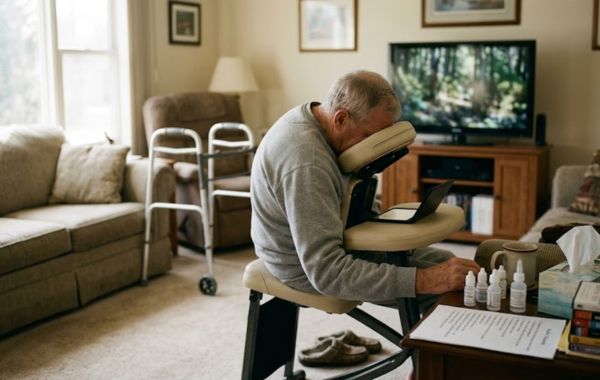
Face down positioning is most commonly required after vitrectomy for retinal detachment and macular hole repair, when a gas bubble is placed inside the eye. The bubble floats upward, so your face has to point down for it to press against the repair site at the back of the eye. Holding the wrong position lets the bubble drift away from where it is needed, which can prevent the retina from reattaching properly.
Here is what helps during the positioning period:
- Rent a face down recovery chair or table rest with a face cutout. Most medical equipment suppliers offer these specifically for post-retinal surgery patients.
- Use a face down mirror so you can watch TV or talk to someone without lifting your head.
- Sleep with your face slightly over the edge of the pillow so no pressure sits directly on the eye.
- Listen to audiobooks or podcasts to pass time without needing to look at a screen.
- Have someone else handle meals, housework, and errands entirely. You should not be bending or doing anything physical during this period.
- Stretch your neck and back gently when stiffness builds up, as long as you keep the correct head angle.
Positioning is usually required for several days to two weeks. The exact duration depends on the type of gas used and what your surgeon found during the procedure. Skipping it, even partially, risks the repair not holding.
Weeks Two to Four
By week two, most people start feeling noticeably better. Here is what to expect during this phase:
- Redness and swelling begin to ease up around days 10 to 14.
- The gas bubble shrinks as your eye replaces it with its own natural fluid. You will often see a horizontal line in your visual field that moves gradually downward. When it disappears, the bubble is fully gone.
- Vision stays blurry for much of this period. This is normal. The retina takes time to re-settle after being repaired, and sharp vision can lag behind the physical healing by weeks or months.
- Light activities like short reading sessions or watching TV are usually fine by week two, but confirm with your surgeon first.
- Light desk work is typically cleared somewhere between weeks two and four. Driving, lifting, and physical labor take longer.
- If silicone oil was used instead of a gas bubble, a separate removal procedure is scheduled two to four months after the original surgery.
Follow-Up Visits and Warning Signs
Post-op appointments are not optional. They are usually scheduled the day after surgery, then at one week, one month, and three months out. Your surgeon uses these visits to check that the retina is staying in place, that eye pressure is within a normal range, and that the drops are doing their job.
Complications do not always come with obvious symptoms. Elevated eye pressure, for example, can build without causing clear warning signs. Patients being treated for macular degeneration or receiving ongoing intravitreal injections may need to be seen more often than the standard schedule. Call your surgeon immediately if you notice a sudden increase in pain that does not ease with over-the-counter medication, a new dark curtain or shadow in your vision, a sharp rise in floaters or flashes of light, increasing redness or discharge, or any sudden drop in vision.
Preparing Before Surgery Day
A little preparation at home before surgery makes the first week significantly easier. Here is what to get sorted:
- Move everyday items to counter height so you do not need to bend down to reach them.
- Clear rugs and tripping hazards from walkways and common areas.
- Order face down equipment in advance if your surgeon says positioning will be required, so it arrives before your procedure date.
- Stock easy-to-prepare foods and have drinks and snacks within reach.
- Fill your prescriptions before surgery day so you have your drops ready from day one.
- Confirm someone can stay with you for at least the first two days and be specific about what you need, meals, transport to follow-up visits, and general household tasks.
- Talk to your employer about time off before surgery. Most patients need one to two weeks, more if the job involves driving or physical activity.
How Long Until Vision Improves
Surgery is designed to stop vision loss and, where possible, recover some of what was lost. But the outcome depends heavily on the type and severity of the original problem, and it is not a fast process. Some patients see noticeable improvement within a few weeks. Others take three to six months to reach their best result.
If the detachment involved the macula, the central part of the retina responsible for sharp and detailed sight, the chances of full vision recovery are lower, especially if there was a delay before surgery. Your surgeon will give you a realistic picture of what to expect based on your specific case. That conversation matters more than any general timeline.
Talking to Your Surgeon Before the Procedure
Before your surgery date, make sure you know which type of fill is being used and whether it requires face down positioning, how many hours per day and for how long, which drops to use and how often, what symptoms to call about right away, and when your first follow-up appointment is. Write these down. It is easy to forget details after a pre-op appointment.
If you are based in Salt Lake City, Murray, Draper, Provo, or Payson and have questions about an upcoming retinal procedure or want to understand what recovery looks like for your specific situation, the board-certified surgeons at Retina and Vitreous Surgeons of Utah treat retinal detachment, macular degeneration, diabetic retinopathy, and other retinal conditions. You can reach the team through the contact page.