
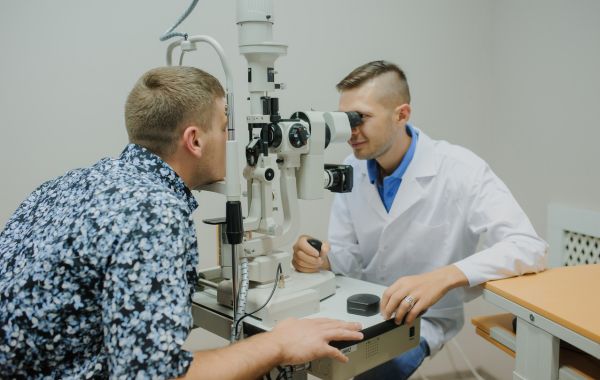
Degenerative maculopathy is one of the eye diseases related to the working of the eye which may affect vision in people as they get old. The biggest concern with degenerative maculopathy is its impact on the central vision, which means the type of vision which is used while reading, driving, recognizing people and seeing small details. In the progression of the disease, patients will face difficulties because of poor vision.
The question of whether Macular Degeneration may lead to complete blindness is one of the major concerns of people suffering from this medical problem. However, it should be stated that this eye problem may only partially impair people’s vision because of the type of the disease, its stage, and retina damage degree. However, despite the possibility that such an eye condition may cause permanent damage to the central vision, it is quite rare for it to cause blindness due to the fact that people have their peripheral vision intact.
Consequently, information on the possible complications that result from this medical condition will enable the patients to detect any symptoms and seek treatment accordingly.
What Is Macular Degeneration?
In macular degeneration, there is an illness that involves the macula in its development. Macula is a structure within the retina which is found at the back of the eye. Retina is responsible for receiving light and transferring visual images to the brain through the optic nerve. This structure assists people to view objects sharply.
Age-related macular degeneration commonly known as AMD mostly affects aged persons. Not all patients with AMD have blindness. Some people only have some minor changes that occur gradually and there are those who have advanced macular degeneration.
It is a disease that mostly affects the central vision and not the peripheral vision. It is very easy to see objects on the sides, but it becomes difficult to read from books or see the faces and the center of the road signs.
Can Macular Degeneration Cause Blindness?
Yes, macular degeneration does lead to blindness. However, macular degeneration does not cause total blindness since this eye condition affects central vision only and not peripheral vision.
This possibility varies according to the development of the disorder. Although macular degeneration in its early phases does not lead to any noticeable symptoms, in its latter phase it leads to destruction of light-sensitive cells within the macula. Should the destruction be significant, central vision will be seriously affected.
People suffering from macular degeneration face problems reading regular-sized prints, driving cars, recognizing individuals, and so on. The severity of the condition varies individually, depending on the eye(s) affected by the condition and on the remaining vision.
However, it should be noted that although macular degeneration is associated with visual loss, it does not necessarily lead to such an outcome.
How Macular Degeneration Affects Vision Over Time
Consequences of macular degeneration for an individual depend on the type of macular degeneration he or she has been suffering from. The consequences of macular degeneration depend upon the stage of macular degeneration in the life of that individual.
Early Macular Degeneration
During the early stages of macular degeneration, most people do not even realize anything is wrong with their eyesight. The formation of tiny deposits under the retina, called drusen, will usually be the only sign of problems, and they will only be spotted by an ophthalmologist.
This is why regular check-ups are very important in catching the disease before it gets worse.
Intermediate Macular Degeneration
In the intermediate phase of the disease, the patient is likely to develop difficulties seeing objects clearly and seeing in poorly lit areas. One will not be able to see small letters in low light conditions.
But intermediate macular degeneration does not always lead to severe vision loss.
Macular Degeneration in Its Late Stage
Late stages of macular degeneration are likely to affect macula negatively. It can result in blind spots in the center part of your vision, blurred straight lines, and face recognition problems.
In late stages, some vision loss can become permanent. There is a possibility to treat certain types of macular degeneration, which can stop its further progression, but not to restore lost vision.
Dry vs. Wet Macular Degeneration: What Is the Difference?
Two types of age-related macular degeneration exist, which include the dry and wet. However, they differ in the way they manifest themselves and possible treatment measures.
Dry Macular Degeneration
The commonest form of macular degeneration is the dry macular degeneration. It results from the gradual damage of the macular cells which causes difficulty in seeing fine details.
At the initial stage, the dry macular degeneration does not affect one’s everyday activities, but at an advanced level, one will have difficulties with reading, seeing in dim lighting, or identifying faces.
Geographic atrophy is one of the latest forms of dry macular degeneration whereby the retina cells waste away. One will get advice from the eye doctor on how to handle it.
Wet Macular Degeneration
If there happen to be any abnormal blood vessels forming around or beneath the macula, then the condition is termed as wet macular degeneration. These blood vessels can make fluids leak into the retina and hence accelerate the loss of vision as compared to dry macular degeneration.
It is very important to diagnose wet macular degeneration early because the visual deterioration may happen very quickly.
| Feature | Dry Macular Degeneration | Wet Macular Degeneration |
|---|---|---|
| Main cause | Gradual breakdown of cells in the macula | Abnormal blood vessels that leak fluid or blood |
| Progression | Often slow, but advanced disease can be serious | Can progress quickly |
| Common symptoms | Blurry central vision and difficulty seeing in dim light | Distorted lines, blurry areas, or sudden changes in central vision |
| Treatment approach | Monitoring, lifestyle measures, and selected treatments for advanced disease | Often anti-VEGF eye injections; other treatments may be suitable in some cases |
| Long-term risk | May cause permanent central vision loss | May cause rapid and severe central vision loss |
Neither has an impact on everyone in the same manner. It requires an eye test to determine the nature of the disease and what treatment works best for them.
Warning Signs That Should Not Be Ignored
Macular degeneration might be experienced without symptoms initially. Nevertheless, once the signs are noticed, then it is necessary to identify them in time for the patient to get proper treatment before developing other complications.
The signs of macular degeneration include:
- Trouble distinguishing fine detail
- Straight lines appearing curved
- Trouble reading
- Problems recognizing people
- Distorted images
- Darkness in your visual field.
Other symptoms of the condition include dullness of colors and increased sensitivity to glare.
When a sudden change occurs in vision that is unrelated to having a new eyeglass prescription, then one has to be evaluated immediately by their ophthalmologist. There should be no delay if straight lines appear distorted or there are blurry spots in the central part of one’s vision.
Who Is at Risk of Developing Macular Degeneration?
Age is the major risk factor for macular degeneration. Yet there may be other risks that would predispose a patient to getting this disease.
The family history is sometimes involved in the occurrence of this disease. Hence, people whose relatives had AMD may consider talking about their risk of having this problem to an eye doctor. Smoking is another critical risk factor. The danger becomes greater for people with hypertension and high cholesterol.
It is impossible to safeguard against macular degeneration by simply living in the right manner. Nevertheless, it may be very useful to refrain from smoking, eat correctly, do physical activities, and keep the blood pressure normal.
For patients suffering from this disease it is necessary to observe the program of observation recommended by their eye doctor. The schedule will depend on every particular patient’s risk factors and progress of the disease.
Can the Treatment Stop Blindness Caused by Macular Degeneration?
It all depends on the nature and severity of the case. There isn’t a one-size-fits-all cure to all types of macular degeneration. However, there are treatments that can help in slowing down the disease’s progression and prevent more loss of vision.
Treatment for Wet Macular Degeneration
Antiangiogenic drug injection is one of the most common ways to address wet macular degeneration. These drugs inhibit a certain protein that promotes abnormal blood vessels formation in the eyes. Through the use of this drug, the leakage and abnormalities of the blood vessels will be prevented. This can help in preserving the central vision.
Repeat injections might be necessary depending on the reaction of the eye and the presence of any signs of the disease.
Photodynamic therapy can also be an option in some cases. Your eye doctor can determine which treatment is best for you according to your blood vessels’ activity and location.
Management of Dry Macular Degeneration
The management of dry macular degeneration is based on the stage of the disease. Early macular degeneration might need close observation without any particular medication. In some cases of intermediate macular degeneration, an ophthalmologist can prescribe an AREDS2 nutritional supplement to lower the risk of progressing into advanced AMD.
These supplements are not for everybody, and they don’t reverse the visual loss. Individuals need to talk to their eye doctor about them before taking them.
In the case of selected individuals having geographic atrophy, medications that aim at complement pathways can aid in reducing the size of the areas affected. These drugs do not help cure the condition and also will not restore vision that is already lost.
How to Maintain Good Eye Health
Although it may not be possible to prevent macular degeneration in all cases, watching out for the condition and maintaining a healthy lifestyle could assist in managing good eye health.
Have Regular Eye Examinations
Comprehensive dilated eye examination can help the eye specialist examine the retina and determine whether the disease is progressing. If needed, additional imaging tests, including optical coherence tomography (OCT), will be carried out to check the macula.
Make sure you keep your appointments even if you do not have any problems with your vision. As the early stages of the disease do not exhibit any symptoms, neglecting them by waiting till the vision gets blurred would be wrong.
Check for Changes at Home
There is a simple way called Amsler grid that can help detect changes in the central vision. It is recommended to examine the grid with each eye separately and pay attention to distorted lines.
Home checks cannot substitute the eye examination. In case you notice a new change, make sure to contact your eye care professional as soon as possible.
Healthy Daily Decisions
Not smoking, maintaining a healthy diet which consists of leafy green vegetables, doing physical exercises, and having normal blood pressure can promote overall good health. In addition to that, if one has any other disease, he/she should take the advice of the doctor for their management.
For those who face problems while performing daily chores due to central vision impairment, there are low-vision aids available.
Conclusion
Macular Degeneration could lead to considerable visual damage; however, it does not have to be severe. Nevertheless, one should not assume that a person who suffers from it will inevitably become blind, because there are people who are still able to see peripherally and whose sight may be protected by treatment.
The first and foremost things to do in this situation are to identify the changes in your vision timely, visit your eye doctor regularly and to adhere to the advice he/she gives. Because of the fact that wet and dry macular degeneration requires different actions to be taken, it is crucial to receive the accurate diagnosis.
To learn more about retinal diseases, possible diagnoses and treatment options, visit Retina and Vitreous Surgeons of Utah. An eye care specialist will evaluate your case and advise on treatment options.