
Diabetes affects more than just blood sugar. Over time, it quietly damages the small blood vessels throughout the body, including the ones inside your eyes. For many people, vision problems are one of the first serious complications they face, and the frustrating part is that damage can build up for years without any obvious symptoms.
If you have diabetes, getting regular eye exams is not something to put off until you notice a problem. By the time you see changes in your vision, the damage to your retina may already be significant. Knowing what is happening inside your eyes, and why keeping up with those appointments matters, is part of managing diabetes well over time.
What Diabetes Does to Your Eyes
The retina is the light-sensitive tissue that lines the back of your eye. It depends on a network of tiny blood vessels to stay healthy and function properly. High blood sugar, over months and years, weakens and damages those vessels. They can leak, swell, or grow in abnormal patterns. When that happens, your vision suffers.
This process is known as diabetic retinopathy. It is the most common diabetes-related eye condition and one of the leading causes of vision loss in adults. What makes it so dangerous is that it often causes no pain and no noticeable vision changes in its early stages. Many patients feel perfectly fine while damage is already underway.
The Stages of Diabetic Retinopathy
Diabetic retinopathy progresses through stages. Finding it early gives you far more treatment options.
- Mild nonproliferative retinopathy. Small areas of swelling appear in the retinal blood vessels. These are called microaneurysms. At this point, most people have no symptoms.
- Moderate nonproliferative retinopathy. More blood vessels become blocked or weakened. The retina starts to get less oxygen than it needs.
- Severe nonproliferative retinopathy. Many blood vessels are blocked. The retina sends signals for new blood vessel growth to compensate.
- Proliferative retinopathy. New, abnormal blood vessels grow on the surface of the retina. These vessels are fragile and can bleed into the vitreous, the gel-like fluid inside the eye. This is the advanced stage and can cause serious vision loss or even blindness.
Early stages are highly treatable. Advanced stages are harder to manage. That is why finding it early is so important.
Diabetic Macular Edema: Another Risk to Know About
Diabetic macular edema, or DME, is a separate but related complication. It happens when fluid builds up in the macula, the central part of the retina responsible for sharp, straight-ahead vision. This swelling distorts and blurs your central vision and can make it difficult to read, drive, or recognize faces.
DME can develop at any stage of diabetic retinopathy and affects roughly one in fifteen people with diabetes over their lifetime. Treatments like intravitreal injections have made a real difference for DME patients, often recovering usable vision when started early. But that window matters. Waiting until vision loss is obvious means there is less to work with.
Why You May Not Notice Symptoms Until It's Too Late
Symptoms tend to show up late. In the early and moderate stages, most people see perfectly well. There is no pain. There are no floaters. Nothing seems off. The damage is microscopic at first, happening at the level of individual blood vessels.
By the time vision actually changes, floaters appear, or things look blurry or distorted, the disease has usually progressed to a more advanced stage. At that point, treatment can often slow or stop further damage, but some of what was lost may not come back.
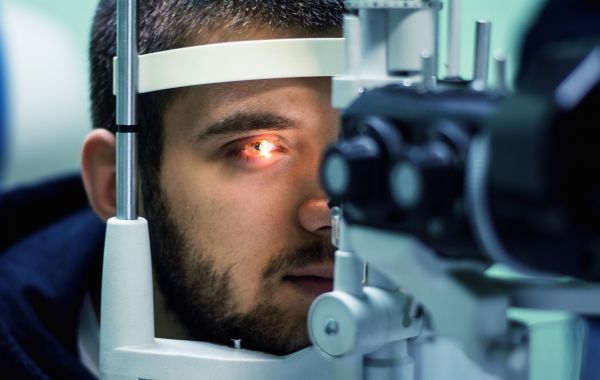
Regular dilated eye exams let a retina specialist see inside your eye and spot changes well before symptoms appear. That is the idea. You are not going in because something feels wrong. You are going in to catch something before it gets the chance to cause harm.
What Happens During a Diabetic Eye Exam
A comprehensive dilated eye exam is different from a standard vision check. Here is what to expect:
- Dilating drops are placed in your eyes to widen the pupils
- The doctor examines the retina, optic nerve, and blood vessels at the back of the eye
- Imaging tools like optical coherence tomography (OCT) produce cross-sections of the retina to pick up swelling or structural changes
- Fluorescein angiography may be used in some cases to track blood flow through the retinal vessels and identify areas of leakage
The exam usually takes around an hour once you factor in waiting for your pupils to dilate. Your vision will be blurry for a few hours afterward, so plan to have someone drive you home.
How Often Should You Get Your Eyes Checked?
The short answer is: at least once a year, and possibly more often depending on what your doctor finds.
General guidelines recommend the following:
- Type 1 diabetes: First dilated eye exam within five years of diagnosis, then annually
- Type 2 diabetes: Dilated eye exam at the time of diagnosis, then annually
- If retinopathy is already present: More frequent exams, sometimes every few months, depending on severity
- Pregnancy with diabetes: An exam before conception or in the first trimester, with close monitoring throughout
Those are general guidelines. Your retina specialist may suggest a different schedule based on your blood sugar control, how long you have had diabetes, and what your exams show over time.
Other Eye Conditions Linked to Diabetes
Diabetic retinopathy and DME are the most well-known complications, but diabetes also raises the risk of other eye problems. These include:
- Cataracts. People with diabetes tend to develop cataracts at a younger age and at a faster rate than people without diabetes.
- Glaucoma. Diabetes roughly doubles the risk of developing glaucoma, a condition involving increased pressure in the eye that can damage the optic nerve.
- Retinal detachment. In advanced proliferative retinopathy, the abnormal new blood vessels can pull on the retina and cause it to detach. This is a medical emergency.
A retina specialist keeping an eye on these things can step in before serious damage is done, not after.
Managing Diabetes to Protect Your Vision
Eye exams matter, but they do not replace good diabetes management. They work alongside it. Keeping your blood sugar, blood pressure, and cholesterol in healthy ranges cuts the risk of retinopathy developing or getting worse.
Studies have found that tighter blood sugar control can cut the risk of developing diabetic retinopathy by more than half, and can slow how fast it worsens in people who already have it. Quitting smoking helps too. Smoking tightens blood vessels and reduces circulation throughout the body, including in the retina.
Seeing a Retina Specialist vs. a General Eye Doctor
If you have diabetes and have been told you have diabetic retinopathy or macular edema, a retina specialist is who you want to see. Retina specialists are ophthalmologists with extra fellowship training in diseases of the retina, vitreous, and macula. Their diagnostic tools and treatment options go well beyond what a general optometrist or ophthalmologist typically has available.
At Retina and Vitreous Surgeons of Utah, the doctors have subspecialty training in vitreoretinal surgery and manage complex retinal conditions including diabetic retinopathy and diabetic macular edema. The practice has offices in Murray, Draper, Provo, and Payson, as well as rural outreach visits to Richfield and Price.
Don't Wait for Symptoms: Take Your Eye Health Seriously Now
Diabetes takes up a lot of mental bandwidth. There are blood sugar checks, medications, diet changes, and doctor visits. It is easy to let an eye exam slide when nothing seems wrong. But diabetic eye disease does its damage quietly, and by the time you notice something is off, the window for the easiest treatment may already be closing.
An annual eye exam is not complicated. It does not take long. And it is one of the few things that can genuinely catch a serious problem before it takes your vision. If you have diabetes and have not had a dilated eye exam recently, or if you have been told you have early retinopathy and want a specialist’s opinion, contact Retina and Vitreous Surgeons of Utah to schedule an appointment at the location nearest to you.