
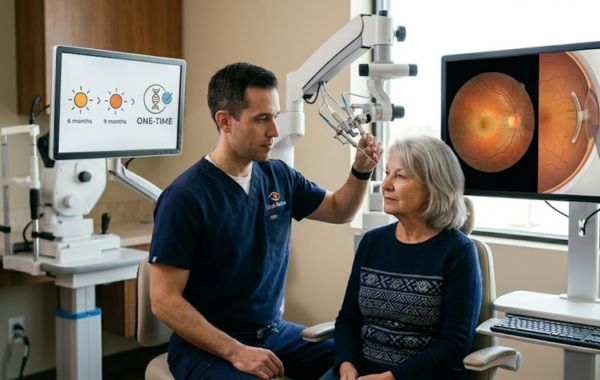
The retina is a thin layer at the back of your eye. It works like a camera sensor and helps you see clearly. It changes light into signals that your brain turns into images. The retina can get damaged due to aging, diabetes, or other health problems, which can lead to vision loss.
For many years, treating retinal diseases meant frequent doctor visits and eye injections. This was hard for patients and families and sometimes caused missed treatments, which could lead to vision loss. Today, new treatments are making care easier and more effective.
1. Longer-Lasting Eye Injections
Some eye diseases happen when small blood vessels in the eye start to leak. A protein in your eye makes tiny blood vessels leak. This hurts your vision. Eye injections help block this protein and protect vision.
In the past, patients needed injections every few weeks. This meant many hospital visits, which was difficult for families.
New treatments are designed to last much longer so patients do not need injections as often:
- Tyrosine Kinase Inhibitors (TKIs): Instead of blocking the VEGF protein after it is made, TKIs stop the eye cells from producing VEGF in the first place.
- The 6-Month Insert: New treatments like EYP-1901 use a tiny, bioerodible insert placed inside the eye during a regular office visit. It slowly releases medicine over a full 6 months. Tests show that most people can go six months without needing a new shot.
- Biodegradable Implants: Other implants, like Axpaxli, sit quietly in the eye and dissolve naturally while providing constant protection for up to a year.
2. Refillable Implants for Retinal Treatment
New refillable tools are now a great choice for long-term care for selected patients requiring ongoing retinal treatment.
The Susvimo Port Delivery System is a tiny reservoir, about the size of a grain of rice. A retina surgeon places it inside the white part of the eye during a quick, outpatient procedure. Once it is in place, it slowly leaks a customised formulation of medicine directly to the retina.
Instead of getting painful monthly shots, patients only need to visit their eye doctor to have the implant refilled. Recent approvals have expanded this technology. This tool works very well for three common eye problem:
- Wet Age-Related Macular Degeneration (AMD)
- Diabetic Retinopathy (DR)
- Diabetic Macular Edema (DME)
With this device, most patients only need a refill once every 9 months, keeping their vision stable with vastly fewer disruptions to daily life.
3. New Treatment Options for Dry AMD
While wet AMD involves leaking blood vessels, dry AMD involves the slow breakdown of retinal cells. The advanced stage of dry AMD is called ‘geographic atrophy’ (GA). For decades, doctors had no approved treatments to stop GA, and patients slowly lost their central vision. New treatments work by helping your body’s own defense system called the complement cascade. In dry AMD, this system becomes overactive and accidentally attacks healthy retinal cells.
Two newer complement inhibitors are widely used to slow down this disease:
- Pegcetacoplan (Syfovre): This medicine is given as a shot to help stop the disease every other month.
- Avacincaptad Pegol (Izervay): This medicine targets a protein called C5 and is injected monthly.
While these treatments cannot reverse the damage or restore lost eyesight, they slow down the expansion of blind spots by roughly 20%. This gives patients more time to preserve their independence, reading vision, and ability to recognise faces.
4. Understanding Retinal Gene Therapy
One of the newest advances in eye care is gene therapy. Instead of managing a disease with endless medicine, gene therapy aims to rewrite how the eye fights the illness from the inside out.
Scientists use a harmless, modified virus vector to carry a healthy gene directly into the retinal cells. Once the cells absorb this new blueprint, they begin manufacturing their own medicine to protect the eye.
Surgeons use three main paths to deliver gene therapy safely to the back of the eye:
Intravitreal Delivery: Simple In-Office Injection.
The gene vector is injected into the jelly-like centre of the eye. While it is the easiest method, the liquid inside the eye can sometimes act as a barrier, diluting the medicine.
Suprachoroidal Delivery: Microinjector Precision.
Using a specialised microinjector, doctors deliver the gene therapy into a tiny space just below the surface layers of the eye. This keeps the medicine concentrated exactly where it is needed without disturbing the delicate inner retina.
Subretinal Delivery: Operating Room Procedure.
A retina specialist performs a precise surgery to place the gene vector directly underneath the outer retina layers. This is the preferred method for genetic conditions because it places the new genes directly into the target cells.
Clinical studies of gene therapies like ABBV-RGX-314 show that one treatment may help the eye produce its own anti-VEGF proteins for years, reducing or even eliminating the need for regular injections.
Comparing Today's Retinal Treatments
The table below outlines how these advanced treatments compare to traditional methods in terms of delivery, frequency, and goals.
| Treatment Category | Specific Examples | How It Is Delivered | How Often It Is Needed | Primary Goal |
|---|---|---|---|---|
| Traditional Anti-VEGF | Eylea, Lucentis, Avastin | Standard eye injection | Every 4 to 8 weeks | Stop vessel leakage and protect central vision |
| Extended-Release Injections | EYP-1901 (Duravyu), Axpaxli | Bioerodible insert or implant | Every 6 to 12 months | Reduce injection frequency while maintaining eye health |
| Port Delivery Systems | Susvimo | Refillable surgical reservoir | Every 9 months | Provide continuous medicine delivery with fewer procedures |
| Complement Inhibitors | Syfovre, Izervay | Standard eye injection | Every 1 to 2 months | Slow down cell death in advanced dry AMD |
| Retinal Gene Therapy | ABBV-RGX-314 | Surgical or microinjector delivery | One-time treatment | Program eye cells to produce their own protective medicine |
How These Treatments Can Help Patients
These advances are changing the way eye care is delivered. The real-world benefits for patients include:
- Fewer Eye Injections: Reducing treatment from monthly injections to just two per year can make patients feel more comfortable and lower the risk of complications such as infections.
- Constant Protection: Traditional injections create peaks and valleys where medicine levels spike and then drop over a few weeks. These devices release medicine continuously, helping protect the retina all day and all night.
- Fewer Doctor Visits: Reducing the frequency of clinic visits makes life much easier for patients and carers who balance busy schedules or rely on others for transportation.
- Better Long-Term Outcomes: Because these treatments are easier to manage, patients are less likely to miss doses, helping prevent vision loss over time.
If you or a loved one are managing a chronic condition like macular degeneration or diabetic eye disease, these options give real hope for an easier and better future.
Final Thoughts
The landscape of retina care is changing faster than ever before. New treatments and drug delivery systems are shifting eye care from short-term fixes to long-term care. These medical advancements mean fewer clinic visits, less discomfort, and a much higher quality of life for individuals dealing with retinal diseases.
Protecting your eyesight requires proactive care and the right medical partner. If you want to learn more about how these 2026 treatment advancements can safeguard your vision, please contact us at Utah Retina today to speak with an experienced specialist.