Uveitis is a form of eye inflammation that affects the middle layer of your eye. It can cause swelling and destroy healthy tissue, leading to permanent vision loss if not treated. Our board-certified retina specialists at RVSU diagnose and manage all types of ocular inflammation.
Because uveitis can be linked to other health issues in your body, an expert diagnosis is vital. Our team works to find the cause of your swelling and protect your sight from long-term damage. We provide a clear path for your eye inflammation treatment using the latest medical tools.
of preventable blindness in the developed world when the inflammation is not properly managed.
are linked to a different health condition or an immune system problem elsewhere in the body.
will experience some form of uveitis in their lifetime, requiring care from a retina specialist.
Uveitis happens when the middle layer of the eye becomes red and swollen. This layer contains many of the blood vessels that keep your eye healthy. When these tissues are inflamed, it can damage the retina and other sensitive parts of the eye.
Anterior Uveitis (Iritis)
This is the most common form and affects the front of the eye. It is often called iritis because it impacts the colored part of your eye. It usually starts suddenly and can cause a very painful, red eye.
Intermediate and Posterior Uveitis
These types affect the middle and back of the eye. They are often more serious because they can be painless while still causing “floaters” and blurred vision. If not caught early, this can damage your sight over time.
Know Your Risk
You are at a higher risk for uveitis if you have an immune system disease like lupus or arthritis. Certain infections or an eye injury can also trigger a flare-up of inflammation.

The eye becomes red, painful, or blurry as the body attacks its own tissue. This stage requires medicine right away to calm the swelling and prevent scarring.
Ongoing swelling can cause the pressure in your eye to rise. This can lead to other issues like glaucoma or a cataract, which makes your natural lens look cloudy.
If the inflammation reaches the back of the eye, fluid can collect under the retina. This causes a dark or wavy spot in your vision that makes it hard to see clearly.
Severe or untreated uveitis can cause scarring of the optic nerve. At this stage, the damage may be hard to fix, making early treatment a top priority.
Uveitis symptoms can appear suddenly or develop slowly over several days. Contact our office right away if you notice any of the following:
Notice box: Uveitis is not a simple eye infection. If you have a red eye that is painful or sensitive to light, you need a dilated exam by a specialist to check for internal swelling.
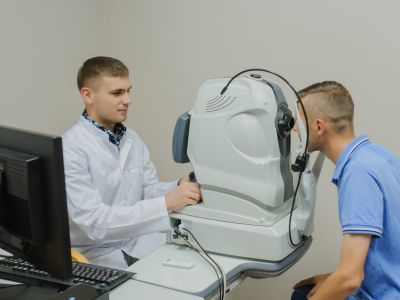
At every visit, our specialists perform a thorough dilated eye exam. We use the most advanced imaging available to find the source of your inflammation.
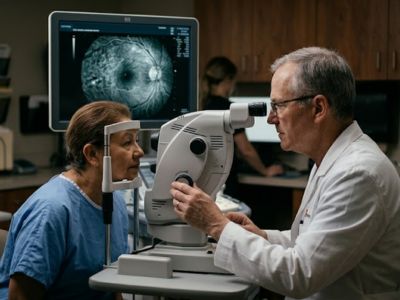
This non-invasive test uses light waves to look at the layers of your retina. It helps our doctors see tiny amounts of swelling or fluid that cannot be seen with a standard exam.
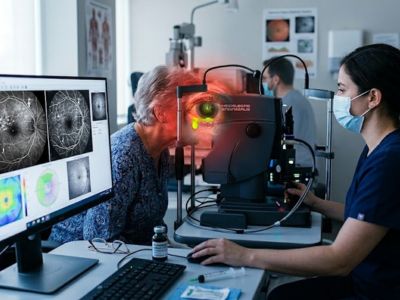
A special dye is used to highlight the blood vessels in your eye. This helps us see if the inflammation is causing vessels to leak or if blood flow to the retina is being blocked.
This test looks deeper into the eye than standard tests. It helps us find inflammation in the layers of blood vessels hidden behind the retina.
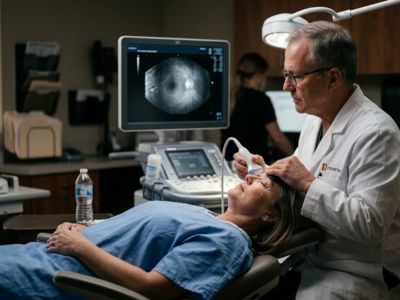
If the inflammation makes the inside of the eye too cloudy to see through, we use sound waves. This allows us to check if the retina is still attached and healthy.
Every appointment includes a hands-on clinical exam. Our fellowship-trained physicians personally examine your eye to track how well your treatment is working
The goal of treatment is to stop the inflammation, relieve pain, and prevent tissue damage. Our specialists will create a plan based on the type of uveitis you have.
Steroid drops are the most common first step to reduce swelling and pain. We also use drops to widen the pupil, which prevents parts of the eye from sticking together.
For inflammation in the back of the eye, we may use medicine injected directly into the eye. We also offer long-term implants that slowly release medicine over many months.
If the inflammation is caused by a body-wide issue, we may prescribe pills to calm the immune system. We work closely with your other doctors to manage these medications safely.
All four of our physicians are board-certified ophthalmologists with fellowship training in vitreoretinal surgery. Managing complex eye inflammation is a clinical focus for each of them.
Uveitis requires specialized care to prevent lasting vision loss. We are accepting new patients at four locations across Utah. Referrals from primary care physicians and rheumatologists are welcome.
See all of our convenient locations across Utah.