
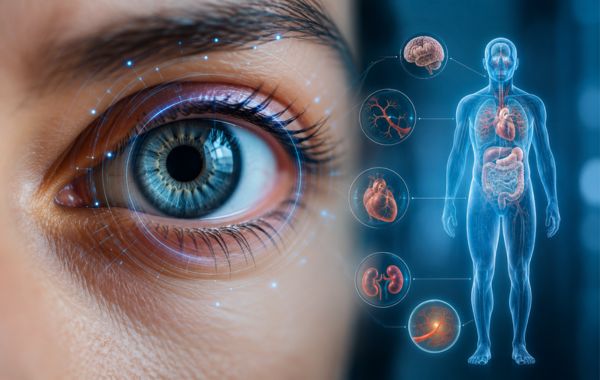
Think about the last time you had your eyes checked. While you were looking at letters on a wall, your doctor was likely looking at something much bigger: a roadmap of your entire body’s health. While poets have spent centuries calling the eyes the window to the soul, modern medicine is proving they are actually a window to your physical well-being through an emerging field called oculomics. Oculomics uses special eye pictures to look at the back of your eye. Doctors look at the tiny blood vessels in your eye to find early signs of health problems. They can often see these signs long before you feel sick or take traditional tests.
If you have ever wondered why your eye doctor takes so many high-tech photos during a routine visit, the answer goes far beyond checking your prescription. The tiny blood vessels in your eyes can reflect the health of your heart, brain, and kidneys. This means a simple, painless eye exam can act as a vital early-warning system, catching serious chronic conditions like diabetes, high blood pressure, or even cognitive decline years before you feel sick. Ultimately, your eyes are giving doctors the ultimate head start in protecting your long-term health.
What Is Oculomics?
Oculomics is the study of the eyes to find signs of health problems in the rest of the body.The word combines ocular, meaning eye, with omics, a science term for studying health information.
In simple terms, oculomics uses clear pictures of your eyes and computer tools to find signs of disease in your body. Doctors look at your retina, the light-sensitive layer at the back of your eye, and its tiny blood vessels. These blood vessels can show early warning signs of health issues long before other tests can.
This field has grown quickly because of better eye scans and smarter computer technology. Eye doctors can now see thousands of small details in one scan. Computers can study these images and find changes that doctors may not notice right away.
How Your Eyes Can Reveal Health Problems
Your eyes are the only place where doctors can see blood vessels without surgery or needles. A simple eye exam lets a doctor look right at these tiny vessels through a lens. These blood vessels are part of the same system that carries blood through your heart, brain, and kidneys. When something changes in your blood vessels, it often means something is changing somewhere else in your body too. The retina is connected to your brain, so it can show signs of changes there too.
This is why an eye exam can act like a small window into your whole body. Your eye doctor is not just checking your vision. They may also be checking on your heart, your blood sugar, and even your brain health.
Health Signs in Your Eyes
Doctors have found links between the retina and many common health problems. Here are some of the most important ones.
- Diabetes: High blood sugar can damage small blood vessels in the retina. This eye problem is called diabetic retinopathy. It often shows up before a person even knows they have diabetes. Tiny leaks, swelling, or unusual blood vessel growth in the retina can be an early warning sign.
- High Blood Pressure: Blood pressure that stays too high for too long can narrow or damage the blood vessels in your eyes. Doctors call this hypertensive retinopathy. Finding it early can help lower the risk of stroke or heart disease later.
- Heart Disease: Studies show that changes in the blood vessels of the retina may be a sign of a higher risk of heart attack or stroke. Since your eyes and heart share the same blood vessel system, doctors can sometimes predict heart risk just by studying eye scans.
- Alzheimer’s and Dementia: This is a major focus for new research. The retina is actually part of your nervous system, and it connects straight to your brain. Some studies suggest that changes in the retina may appear years before memory problems begin. This could one day help doctors catch Alzheimer’s disease much earlier than they can today.
- Kidney Disease: Your kidneys and eyes both rely on small, delicate blood vessels. Damage in one area can be a sign of damage in the other. Eye scans can sometimes flag kidney problems before a person notices any symptoms.
- Stroke Risk: Because the retina shows blood vessel health so clearly, some studies have used retinal images to help predict a person’s risk of stroke. This gives doctors another tool to catch problems before they become an emergency.
How Oculomics Works
Modern eye clinics use special tools to take clear pictures of your eyes. Here are a few of the main ones used in oculomics research and everyday eye care.
- Optical Coherence Tomography (OCT) This scan takes detailed pictures of the inside of your retina, like a tiny scan of your eye. It shows the different layers of the retina in fine detail and can pick up very small changes.
- Retinal Photography This takes a clear picture of the back of the eye, showing the blood vessels and optic nerve. Doctors compare these images over time to track changes.
- OCT Angiography This newer scan maps out the blood flow in your retina. It gives doctors a clear picture of your blood vessel health without using any needles or dyes.
- Artificial Intelligence and Machine Learning Once these images are captured, computer programs can study them in seconds. AI models can compare a scan against thousands of other images to spot patterns linked to disease. This helps doctors catch problems faster and with more accuracy than ever before.
Benefits of Early Detection
Many serious diseases develop quietly. High blood pressure, diabetes, and even heart disease can grow for years without any clear symptoms. By the time a person notices something wrong, the disease may already be advanced.
This is where oculomics can make a real difference. Eye scans are quick, painless, and do not require surgery. They give you an easy way to check on your health. A yearly eye test does far more than just check your vision. It could catch a hidden health issue while it is still easy to treat. Early detection often means simpler treatment, lower costs, and better outcomes. Finding a problem sooner gives you and your doctor more time to act.
Who Needs Regular Eye Exams
While everyone benefits from regular eye exams, some people should be extra careful about keeping up with them. This includes:
- People with diabetes or a family history of diabetes
- People with high blood pressure
- Adults over the age of 50
- People with a family history of heart disease or stroke
- People with a family history of Alzheimer’s and dementia
- Anyone who has noticed changes in their vision
If you fall into one of these groups, a regular eye exam is not just about clear vision. It is a smart step toward protecting your overall health.
What to Expect During an Eye Exam
A modern comprehensive eye exam goes beyond simply asking you to read letters on a chart. Your eye doctor may use advanced imaging tools to check the back of your eye and study your retina and blood vessels closely. This process is simple and painless. Most scans take just a few minutes and do not require any needles or discomfort. Your doctor will review the images, look for warning signs, and let you know if anything needs further attention.
If any changes are found, your eye doctor can help guide you toward the right next steps, whether that means a referral to another specialist or simply keeping a closer eye on your health moving forward.
Final Thoughts
Your eyes carry far more information about your systemic wellness than most people realize. Through the clinical advancements of oculomics, a non-invasive evaluation of the retina can reveal vital diagnostic clues regarding your cardiovascular health, renal function, blood glucose levels, and neurological well-being. Ultimately, comprehensive ocular imaging has evolved beyond vision correction; it is now an essential component of preventative healthcare, allowing providers to detect and manage chronic conditions long before physical symptoms manifest.
If you are ready to schedule a thorough diagnostic evaluation that prioritizes your vision and your long-term health, the specialized team at Utah Retina is here to help. We invite you to contact us today to request an appointment at one of our convenient locations, allowing our experts to provide you with a clearer picture of your overall well-being.