
Most people don’t think about their kidneys and eyes as being connected, but they share more in common than you might expect. In reality, problems affecting one can sometimes affect the other. If you have kidney disease, your eyes could be at risk too. This is not a rare problem. It happens to many people, and most of them do not know it until vision loss begins.
Millions of people live with some stage of kidney disease, and many of them are never told that their vision could be at risk. Eye doctors and kidney doctors do not always talk to each other, so this connection often gets missed. That gap can be costly, because early retinal damage is much easier to treat than damage that has been building for years.
In this blog, we will explain why kidney disease affects your eyes, what warning signs to watch for, and why regular eye exams matter so much if you have kidney problems.
How Kidneys Affect Your Eyes
Your kidneys and your eyes are connected through tiny blood vessels called capillaries. Your kidneys use these blood vessels to clean your blood. Your retina, the light-sensitive layer at the back of your eye, also depends on healthy blood flow to work properly. When diseases like diabetes or high blood pressure damage these blood vessels, they can affect both your kidneys and your eyes.
When your kidneys do not work well, changes happen throughout your body. These changes can also harm your eyes in several ways.
- Waste Builds Up: When your kidneys cannot clean your blood well, waste stays in your body. This can affect your eyes over time.
- Fluid Buildup: Extra fluid in your body can cause swelling and increase pressure in your eyes.
- High Blood Pressure: Kidney disease can raise your blood pressure, which may damage the tiny blood vessels in your retina.
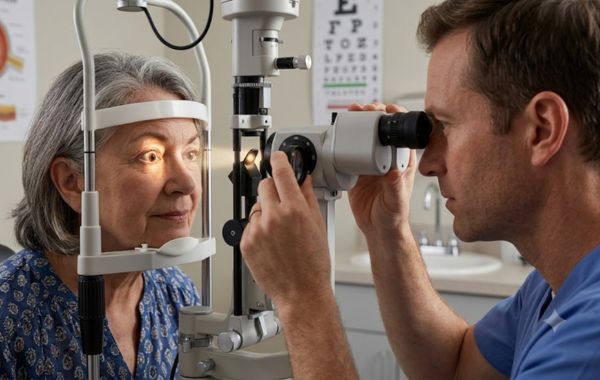
During a dilated eye exam, your eye doctor can see the tiny blood vessels in your retina. These blood vessels can show early signs of damage caused by kidney disease, diabetes, or high blood pressure.
Eye Problems Caused by Kidney Disease
People with chronic kidney disease (CKD) have a higher risk of eye problems. This is because the kidneys and eyes both depend on healthy blood vessels. When these blood vessels become damaged, both organs can be affected.
1. Diabetic Retinopathy
Diabetes is the leading cause of chronic kidney disease and the leading cause of blindness in working-age adults. When high blood sugar damages the kidneys’ filters, it is often quietly doing the same to your eyes.
How it happens: High blood sugar damages the tiny blood vessels in the retina. These blood vessels can leak fluid or bleed, which can affect your vision.
What to watch for:
- Blurry, hazy, or double vision
- Floaters (dark spots or web-like lines drifting in your field of vision)
- Poor night vision or dark, empty areas in your central view
2. Hypertensive Retinopathy
High blood pressure is another primary driver of both kidney failure and vision impairment.
How it happens: High blood pressure can damage the tiny blood vessels in your eyes. This reduces healthy blood flow to the retina and can lead to vision problems.
What to watch for:
- Frequent headaches or eye strain
- Sudden, temporary episodes of blurred vision
- Double vision or a feeling of pressure behind the eyes
3. Retinal Vein Occlusion (RVO)
Often referred to as an eye stroke, this condition occurs when the main drainage veins of the retina become blocked.
How it happens: Kidney disease can increase blood pressure and raise the risk of blood clots. A clot in a retinal vein can suddenly affect your vision.
What to watch for:
- Sudden, painless blurry vision in one eye
- Complete, sudden loss of vision in one eye
- Dark or distorted areas in your visual field
4. Macular Edema
The macula is the small, highly sensitive center of your retina that allows you to see sharp details, read, and recognize faces.
How it happens: Damaged blood vessels can leak fluid into the retina. This causes the macula to swell and makes your central vision blurry.
What to watch for:
- Wavy or bent lines (e.g., doorframes or paper lines looking crooked)
- Faded, washed-out colors
- Persistent blurriness right in the center of your vision
5. Anemia-Related Eye Changes
Anemia is extremely common in kidney disease patients because damaged kidneys produce less erythropoietin, the hormone responsible for signaling your body to make red blood cells.
How it happens: Low red blood cell levels reduce the oxygen reaching your retina. This can weaken the blood vessels and affect your vision.
What to watch for:
- Visual fatigue and generalized physical exhaustion
- Mild, persistent blurriness
- Occasional tiny blind spots caused by minor retinal bleeding
Kidney Disease and Eye Conditions
| Eye Condition | How Kidney Disease Contributes | Common Symptoms |
|---|---|---|
| Diabetic Retinopathy | High blood sugar damages small vessels in both kidneys and retina. | Blurry vision, dark spots, trouble seeing at night. |
| Hypertensive Retinopathy | High blood pressure narrows and weakens eye blood vessels. | Headaches, blurred vision, vision changes. |
| Retinal Vein Occlusion | Thicker blood and high blood pressure raise clot risk. | Sudden blurry vision, dark areas in vision. |
| Macular Edema | Fluid buildup from vessel damage affects central vision. | Wavy lines, blurry central vision, faded colors. |
| Anemia-Related Changes | Low red blood cell count affects retinal blood supply. | Pale vision, fatigue, occasional retinal bleeding. |
Warning Signs You Should Not Ignore
Eye damage from kidney disease often starts quietly. You may not feel pain, and your vision might only change a little at first. Watch for these warning signs:
- Blurry or wavy vision
- Dark spots or floaters that suddenly appear
- Trouble seeing at night
- Sudden vision loss in one eye
- Colors that look faded or washed out
- Straight lines that appear bent or wavy
If you notice any of these signs, do not wait. Early treatment can save your vision.
How Treatment Affects Your Eyes
Some kidney disease treatments can also affect your eyes. Knowing about these changes can help you protect your vision.
- Dialysis can cause sudden changes in blood pressure and fluid levels, which may affect vision temporarily.
- Certain medications used to manage kidney disease can have side effects that affect the eyes.
- Kidney transplant medications, especially steroids, can raise the risk of cataracts or glaucoma over time.
Keep following your treatment plan. Make sure your eye doctor and kidney doctor know about your health and the medicines you take so they can work together to protect your vision.
How to Protect Your Vision
You cannot control every risk factor, but there is a lot you can do to protect your eyes.
- Control your blood sugar: If you have diabetes, keeping blood sugar levels steady protects both your kidneys and your eyes.
- Manage your blood pressure: High blood pressure is one of the biggest threats to both organs.
- Get regular eye exams: Do not skip your yearly dilated eye exam, even if your vision feels fine.
- Follow your kidney treatment plan: Staying on top of dialysis or medication schedules helps protect your whole body.
- Watch for symptoms: Report any vision changes to your doctor right away, no matter how small they seem.
- Eat a kidney-friendly, balanced diet: This helps control blood pressure and blood sugar, which protects your eyes too.
- Avoid smoking: Smoking damages blood vessels everywhere in the body, including the retina.
Conclusion
Kidney disease can affect more than just your kidneys. It can also damage the tiny blood vessels in your eyes. The good news is that many eye problems can be treated if they are found early. Regular eye exams, healthy blood pressure, good blood sugar control, and quick treatment for vision changes can help protect your eyesight.
If you are living with chronic kidney disease, high blood pressure, or diabetes, your eye health requires specialized attention. The expert team at Utah Retina understands the complex relationship between systemic health conditions and your vision, and we are dedicated to providing the advanced diagnostic care you need to preserve your sight. Don’t wait for symptoms or vision loss to appear please contact us today by calling our office or visiting our website online to schedule your comprehensive dilated eye exam and protect your future view.