
Imagine waking up, opening your eyes, and realizing everything looks fuzzy. You rub your left eye, and it seems perfectly clear. You rub your right eye, but the fuzziness remains. Blurry vision in one eye is a common problem that many people try to ignore. You might think you just need sleep, or that your glasses are dirty. However, sudden blurry vision in one eye is not something you should sleep on. It is a major warning sign that something might be wrong with your retina.
Your retina is a thin layer of tissue that lines the back of your eye. It acts like the film in an old camera or the digital sensor in a smartphone. When light enters your eye, the retina captures the picture and sends it to your brain through the optic nerve. If the retina gets damaged or pulled away from its normal position, your vision drops instantly.
When blurry vision happens in both eyes at the same time, it often means you need a new prescription for glasses. It could also mean your eyes are just dry. But when blurry vision happens suddenly in only one eye, it points to a localized issue inside that specific eye. This is often a retinal emergency. Knowing the difference between a minor eye issue and a medical emergency can save your eyesight.
What Is a Retinal Emergency?
A retinal emergency is a medical crisis where the retina loses its blood supply, tears, or peels away from the back of the eye. The cells in your retina need a constant flow of oxygen and nutrients to stay alive. If that flow stops or gets interrupted, those cells start to die within hours. Once these specialized vision cells are gone, they cannot grow back.
This is why eye doctors treat sudden one-sided blurry vision with such urgency. Waiting even twenty-four hours to see a doctor can turn a treatable issue into permanent blindness. A retinal emergency does not usually cause pain. Because you cannot feel a tear or a block in the back of your eye, you have to rely entirely on visual warning signs.
Red Flag Symptoms That Pair with Blurry Vision
Blurry vision rarely happens completely by itself during a retinal crisis. Usually, your eye will give you a few other hints that something is wrong. Paying close attention to these extra symptoms will help you realize when it is time to go straight to an eye specialist.
- Sudden Eye Floaters: Floaters look like tiny spots, webs, or threads that drift across your field of vision. A few small floaters are normal as we grow older. But if you suddenly see dozens of new floaters all at once, it means something is moving or tearing inside your eye.
- Flashing Lights: These look like small lightning streaks, camera flashes, or flickering stars in your side vision. They happen when something physically pulls or tugs on your retina. Your retina can only send vision signals to your brain, so when it gets tugged, your brain interprets that movement as a flash of light.
- A Dark Shadow or Curtain: This is one of the most dangerous signs. If you notice a dark shadow creeping in from the side, top, or bottom of your vision, your retina might be actively peeling away.
- Distorted Lines: If straight lines like doorways, window frames, or lines of text look bent, wavy, or crooked, the center of your retina is likely swollen or damaged.
Common Retinal Emergencies That Cause Blurry Vision
Several serious eye conditions can cause your vision to blur in one eye. Understanding these conditions helps explain why immediate medical care is necessary.
1. Retinal Detachment
Retinal detachment happens when the retina peels away from its normal spot at the back of the eye. Think of it like wallpaper peeling off a damp wall. When the retina detaches, it gets separated from the blood vessels that give it oxygen. This usually starts with a small tear. Liquid from inside the eye seeps through the tear and lifts the retina up. If it is not fixed quickly by a retina specialist, the entire retina can detach, causing permanent loss of sight in that eye.
- Key Warning Sign: A shadow or gray curtain pulling across your field of vision.
- How It Happens: Liquid from inside the eye leaks behind a small tear, lifting the tissue away.
- Urgency Level: Extreme emergency requires surgery within hours to days to save eyesight.
2. Retinal Vein Occlusion (Eye Stroke)
Just like your heart or brain, your eyes rely on arteries to bring fresh blood and veins to drain old blood. A retinal vein occlusion happens when a tiny blood clot blocks a vein in your retina. This is often called an eye stroke. When the vein is blocked, blood backs up and leaks into the retina, causing sudden swelling and blurry vision. People with high blood pressure, diabetes, or high cholesterol have a higher risk of experiencing an eye stroke.
- Key Warning Sign: Sudden, painless blurriness or vision loss in one eye that stays consistent.
- How It Happens: A blocked vein causes blood and fluid to back up, leading to severe swelling in the retina.
- Who Is Most at Risk: Individuals with high blood pressure, high cholesterol, or diabetes.
3. Retinal Artery Occlusion
This is another type of eye stroke, but it is even more critical. It happens when an artery bringing oxygen-rich blood to the retina gets blocked by a clot. This cuts off the oxygen supply instantly. A retinal artery occlusion causes a sudden, painless loss of almost all vision in one eye. This requires immediate emergency medical care to try to restore blood flow before the retinal tissue dies permanently.
- Key Warning Sign: Severe, instant, and painless blindness across the entire eye.
- How It Happens: A tiny clot completely blocks the oxygen supply to the retina’s main power lines.
- Urgency Level: Medical emergency treatable windows for reversing damage are incredibly short.
4. Wet Macular Degeneration
Macular degeneration is an eye disease that blurs the sharp, central vision you need to read or drive. It targets the macula, which is the very center of your retina. The wet form of this disease is an emergency. It happens when abnormal, fragile blood vessels grow under the macula. These vessels break easily and leak blood or fluid into the eye, causing rapid, severe blurring or a blind spot right in the middle of your vision.
- Key Warning Sign: Straight lines (like doorways or window frames) suddenly look bent, wavy, or distorted.
- How It Happens: Weak, abnormal blood vessels grow out of control and leak fluid right beneath your central vision zone.
- Long-Term Impact: Can cause a permanent dark or blank spot directly in the center of your sight if ignored.
5. Diabetic Retinopathy and Vitreous Hemorrhage
People with diabetes can develop damage to the tiny blood vessels in their eyes over time. If blood sugar stays high, these vessels can close off, forcing the eye to grow new, weak blood vessels. These new vessels can break and bleed into the clear gel that fills the center of your eye. This bleeding is called a vitreous hemorrhage. It can cause sudden blurry vision or dark streaks that block your sight completely.
- Key Warning Sign: Sudden dark streaks, cloudiness, or red tints that wash over your vision.
- How It Happens: Fragile new blood vessels burst and leak blood into the clear gel inside the center of the eyeball.
- Prevention Tip: Managing and controlling daily blood sugar levels drastically lowers the chance of this sudden bleeding.
Emergency vs. Non-Emergency Eye Issues
Not every case of blurry vision means you are losing your eyesight, but it is vital to know how to spot the difference. The table below outlines how common, non-emergency eye problems compare to serious retinal emergencies.
| Feature | Non-Emergency Eye Issues | Retinal Emergencies |
|---|---|---|
| How Fast It Starts | Develops slowly over weeks, months, or years. | Happens suddenly, often in a matter of minutes or hours. |
| Which Eyes Are Affected | Usually affects both eyes equally. | Almost always strikes just one eye at a time. |
| Pain Level | May cause mild burning, itching, or a gritty feeling. | Completely painless, though internal damage is occurring. |
| Floaters and Flashes | No sudden changes in floaters or flashing lights. | Accompanied by a sudden burst of new floaters or flashes. |
| Vision Field Changes | Vision is blurry overall, but your field of view stays open. | A dark shadow, blind spot, or gray curtain blocks your view. |
| What to Do | Schedule a routine eye exam with an optometrist. | Go to an emergency room or call a retina specialist immediately. |
How Eye Specialists Protect and Save Your Sight
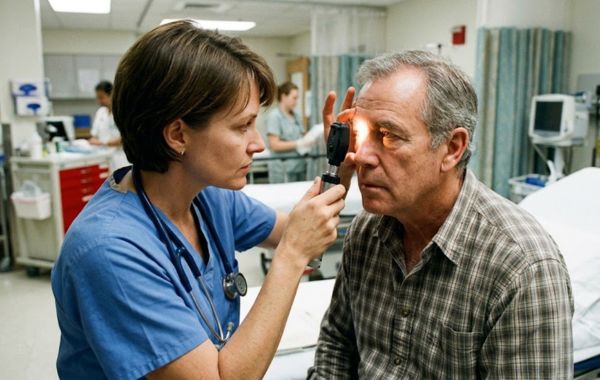
When you arrive at a specialized clinic like Utah Retina, the team will perform a dilated eye exam. They use special drops to widen your pupils, allowing the doctor to look directly at the back of your eye with a powerful lens. If they find a problem, several highly effective treatments can save your sight:
- Laser Therapy: If you have a retinal tear that has not yet turned into a full detachment, a doctor can use a medical laser to weld the edges of the tear back down. This prevents fluid from leaking underneath and peeling the retina away.
- Cryopexy (Freezing): Similar to a laser, this treatment uses extreme cold to freeze the tissue around a tear, creating a tiny scar that secures the retina firmly in place.
- Vitrectomy Surgery: For a full detachment or a severe bleed, a surgeon can carefully remove the gel inside your eye and replace it with a gas bubble or silicone oil. This bubble presses the retina back against the wall of the eye so it can heal.
Conclusion
Sudden blurry vision in one eye is your body’s way of sending an urgent distress signal. Unlike gradual vision changes that affect both eyes, a sudden, one-sided blur is a hallmark warning sign of a retinal emergency. Because conditions like retinal detachment or an eye stroke are completely painless, you must rely entirely on visual red flags like sudden flashing lights, a burst of new floaters, or a dark curtain blocking your view.
When it comes to the retina, time is vision. Waiting even twenty-four hours can turn a highly treatable issue into permanent blindness. By memorizing these warning signs, managing underlying health conditions, and scheduling regular dilated eye exams, you can protect your eyesight and keep your vision clear for years to come.
If you or a loved one are experiencing sudden vision changes, flashing lights, or a sudden increase in floaters, every minute counts. Contact our dedicated team immediately to get the expert care you need.