
The macula is a small part of your retina that helps you see clearly. You use it to read, drive, and recognize faces.It helps you see fine details clearly. When it becomes damaged, everyday tasks like reading, driving, and recognizing faces become harder.
Age-related macular degeneration (AMD) is one of the leading causes of vision loss in adults over 50. There is no cure, but healthy daily habits can help slow the disease and protect your vision. Healthy habits like eating well, protecting your eyes, and getting regular eye exams can help slow AMD and catch problems early.
10 Daily Habits to Protect Your Macular Health
1. Eat More Leafy Greens
Your eyes need certain nutrients to stay healthy as you age. Two of the most important nutrients are lutein and zeaxanthin. These nutrients help keep your macula healthy.
Your body cannot make these nutrients, so you need to get them from food.
- Best choices: Spinach, kale, collard greens, Swiss chard, and turnip greens.
- Other great sources: Broccoli, green peas, Brussels sprouts, and corn.
- Simple habit: Aim for at least one cup of cooked dark leafy greens or two cups of raw greens every single day. Eat them with foods like olive oil or eggs. This helps your body absorb these nutrients.
2. Ask About AREDS2 Vitamins
If your AMD has gotten worse, healthy food may not be enough. Your doctor may recommend special vitamins. Studies show that AREDS2 vitamins may help slow AMD in some people.
The standard AREDS2 formula includes:
- 500 mg Vitamin C
- 400 IU Vitamin E
- 10 mg Lutein
- 2 mg Zeaxanthin
- 80 mg Zinc (as zinc oxide)
- 2 mg Copper (to prevent copper deficiency caused by high zinc levels)
AREDS2 vitamins cannot cure AMD or restore lost vision. They are not recommended for people who do not have AMD. Talk to your eye doctor before taking these vitamins.
3. Wear UV-Blocking Sunglasses
UV rays from the sun can damage your eyes over time. Protecting your eyes may help keep your macula healthy. Many people only put on sunglasses during bright midsummer afternoons, but UV rays can reach your eyes even on cloudy days and can reflect off water, snow, and sidewalks.
- Look for the label: Buy sunglasses clearly marked 100% UV protection or UV400. This ensures the lenses block both UVA and UVB rays.
- Choose dark tint wisely: Dark lenses do not always protect your eyes. Always choose sunglasses labeled 100% UV protection or UV400.
- Wear a wide-brimmed hat: A wide-brimmed hat gives your eyes extra protection from the sun.
4. Quit Smoking
If you smoke, quitting is the single most effective change you can make to protect your sight. People who smoke are much more likely to develop macular degeneration than those who do not smoke.
Smoking damages the tiny blood vessels that keep your retina healthy. It also reduces the oxygen your eyes need to work properly.
- It is never too late: Quitting smoking can lower your risk of AMD getting worse over time.
- Watch out for secondhand smoke: Regularly breathing in other people’s smoke also increases your risk of retinal damage.
5. Check Your Vision Weekly
Dry AMD can sometimes turn into wet AMD. This happens when new, weak blood vessels can grow under the macula and leak blood or fluid. They can leak blood or fluid and quickly damage your central vision.
If wet AMD is caught early, early treatment, such as anti-VEGF injections, can help protect your vision.
An Amsler Grid is a simple chart that helps you check for changes in your central vision at home. If straight lines suddenly look bent, broken, or wavy, contact your retina specialist immediately. Getting treatment quickly can help protect your vision.
6. Control Blood Pressure and Cholesterol
Your retina needs a steady supply of oxygen and nutrients to stay healthy.Healthy blood vessels bring oxygen and nutrients to your retina. High blood pressure can damage the blood vessels in your eyes. This restricts healthy blood flow to your macula. High cholesterol can reduce blood flow and make it harder for your retina to stay healthy.
- Monitor numbers at home: Keep track of your blood pressure readings and keep them within target ranges recommended by your primary care doctor.
- Limit sodium: Reduce processed foods and excess salt in your diet to protect your cardiovascular system.
- Keep cholesterol balanced: Eat fiber-rich foods like oats, beans, and lentils to support clean, healthy arteries.
7. Exercise Regularly
Exercise is not just about heart health or weight management it directly shields your eyes as well. Regular exercise improves blood flow and supports healthy eyes (pressure inside the eye).
Studies have found that adults who maintain an active lifestyle are significantly less likely to experience advanced forms of macular degeneration compared to those who lead a sedentary lifestyle.
- Target duration: Aim for 150 minutes of moderate aerobic exercise every week (about 30 minutes a day, 5 days a week).
- Safe activities: Brisk walking, cycling, water aerobics, or stationary rowing are excellent options that improve cardiovascular circulation without straining your joints.
- Consistency over intensity: You do not need to train for a marathon. A steady daily walk around your neighborhood provides huge benefits for your retinal circulation.
8. Eat Fish Twice a Week
Your retina contains high concentrations of DHA (docosahexaenoic acid), a specific type of omega-3 fatty acid. DHA forms a vital structural component of the cell membranes in your light-sensing photoreceptors.
Consuming foods rich in omega-3 fatty acids helps maintain healthy cell membranes in the retina, lowers chronic inflammation, and reduces the risk of dry AMD advancing into wet AMD.
- Best fish sources: Salmon, mackerel, sardines, trout, and tuna.
- If you do not eat fish, walnuts, chia seeds, and flaxseeds are good plant-based sources of omega-3 fats.
- Cooking tip: Bake, broil, or grill your fish rather than deep-frying it. Deep-frying creates trans fats that increase inflammation and undermine the benefits of the omega-3s.
9. Rest Your Eyes from Screens
Many people spend hours looking at phones and computers. Too much screen time can make your eyes feel tired and dry.
When you stare at screens, you blink less when using screens, which can dry out your eyes. This dries out the surface of your eye (cornea), leading to blurry vision and discomfort that masks underlying retinal symptoms.
- Follow the 20-20-20 rule: Every 20 minutes, look away from your screen at an object at least 20 feet away for at least 20 seconds. This allows your eye’s focusing muscles to relax.
- Use glare filters: Position monitors away from direct window glare or apply an anti-glare screen cover.
- Keep artificial tears nearby: Artificial tears can help keep your eyes comfortable during long screen sessions.
10. Get Regular Eye Exams
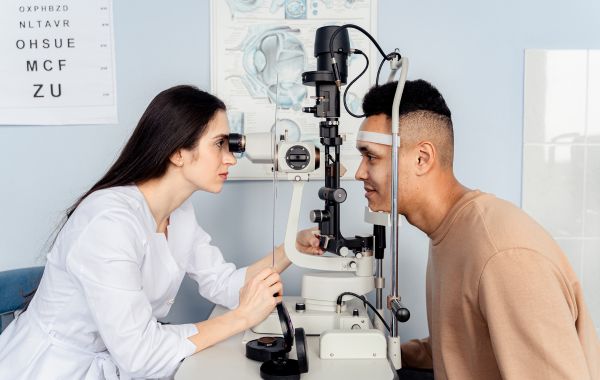
Early AMD often has no warning signs. A routine glasses check with an optician is not enough to monitor macular degeneration. You need a comprehensive dilated eye exam performed by an eye care professional or a specialized retina specialist.
During your exam, the specialist will evaluate your retinal health using advanced tools:
- Detects hidden warning signs: Tiny yellow deposits called drusen can build up under your retina long before you notice any vision changes.
- Get a detailed view: Eye drops widen (dilate) your pupils so your doctor can clearly inspect the back of your retina for structural damage.
- Catch problems early with OCT scans: Advanced 3D imaging allows your specialist to map retinal layers and spot microscopic changes before permanent damage occurs.
AMD Care Routine
Building new habits takes time. Breaking your eye care routine into daily, weekly, and yearly steps makes tracking simple.
| Frequency | Target Habit | Primary Eye Benefit |
|---|---|---|
| Daily | Eat dark leafy greens (spinach, kale) | Supplies lutein/zeaxanthin to filter blue light |
| Daily | Wear UV400 sunglasses outdoors | Prevents direct solar damage to retinal cells |
| Daily | Take AREDS2 vitamins (if prescribed) | Reduces risk of advanced AMD progression |
| Weekly | Perform the Amsler Grid test | Catches sudden distortion or wet AMD early |
| Weekly | Eat fatty fish 2 times | Delivers DHA omega-3s to support retinal membranes |
| Weekly | Log 150 minutes of aerobic exercise | Boosts blood flow and oxygen to the choroid |
| Yearly | Dilated eye exam with a retina specialist | Detects hidden structural changes with OCT scans |
Conclusion
If you have AMD or are at risk for it, there are simple steps you can take to protect your vision. Simple daily habits like eating nutritious foods, wearing UV-protective sunglasses, staying physically active, avoiding smoking, and scheduling regular eye exams can help support your retinal health. Just as importantly, paying attention to new symptoms and acting quickly if your vision changes can make a significant difference in protecting your sight.
At Utah Retina, our board-certified retina specialists are dedicated to diagnosing, monitoring, and treating macular degeneration using advanced imaging and the latest treatment options. Whether you need a routine retinal evaluation or specialized care for AMD, our team is here to help. Contact us today to schedule an appointment and take the next step toward protecting your vision.